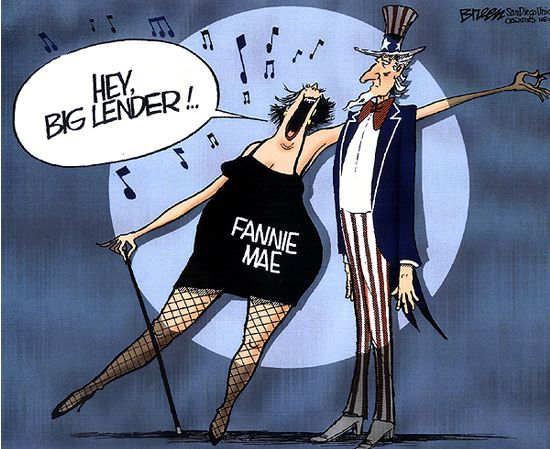
KISS MY FANNIE MAE

ROAD TO LIBERTY in July 2013 wrote

FANNIE MAE, BY ITS OWN ADMISSION, OWNS NOTHING …”

fannie-mae-cartoonLIBERTY continues:  “[Judge] Schack correctly concludes that “FANNIE MAE’s Servicing Guide, with its deceptive practices to fool courts, does not supercede New York law.”  I had the same thought when I first encountered this fiat decree of Fannie Mae’s when researching my own lawsuit against Fannie Mae and others a couple of years ago.  It is a relief to hear a judge articulate this so starkly.”

The LIBERTY post inspired a Honolulu attorney’s client who penned a tribute to ol’ Fannie: Continue reading

State AGs settle with LPS for $113 million; Only Nobody Knew

cluelessIn an investigative post, MSFraud.org exposed an unknown state Attorneys General settlement with Lender Processing Services (LPS) for $113 million dollars in an El Paso district court.

One would wonder how, for example, the State of Hawaii (who received a pittance compared to the damage to titles LPS has caused) could even begin to agree to a settlement when they have NEVER even bothered to audit its own Hawaii Bureau of Conveyances! Hawaii is a mortgage lien state where the homeowner holds the deed, unlike a Deed of Trust state where the deed is held by a (fishy) beneficiary.

Millions of homeowners never knew that LPS fabricated and falsified documents that could still cloud their titles for years to come – even if they received a modification. The point here is that many states, including Hawaii where land rights are a very precious subject, have turned a blind eye to fraudulent assignments of mortgage or the fact that the mortgage   Continue reading

Glaski Decision Appears to Place Lenders on Notice to Verify Accuracy and Effectiveness of Loan Assignments

It is the premise that counts. The CA appellate court restores my faith in judiciary intelligence. Write good law, write a book, make a movie (you’re close to Hollywood) – in the long run it’ll be worth more than your stock portfolios.

justiceleague00's avatarJustice League

Glaski Decision Appears to Place Lenders on Notice to Verify Accuracy and Effectiveness of Loan Assignments


by:
Duane Morris LLP – Philadelphia Office
 
September 11, 2013

Previously published on September 10, 2013

The recent decision in Glaski v. Bank of America, National Association, et al., 160 Cal. Rptr. 3d 449 (2013), may, at least in certain circumstances, impact the ability of residential mortgage-backed security and commercial mortgage-backed security lenders to keep pooling and servicing agreements out of two-party borrower-lender disputes, and appears to place lenders on notice to verify the accuracy and effectiveness of their loan assignments.

In Glaski, the borrower’s residence was foreclosed upon (due to nonpayment) by the successor to a securitized trust. After the foreclosure, the borrower filed a complaint for fraud, quiet title, wrongful foreclosure, declaratory relief and cancellation of foreclosure documents against the successor to the securitized trust, among other entities…

View original post 697 more words

Is Borrower Bashing a Disease or Psychotic Disorder?

Scott Stafne goes to Dallas

By Scott E Stafne of Stafne Trumbull, LLC

Scott042-850x422-580x333In search of Continuing Legal Education credits I wandered into a different world last Thursday and Friday at the American Conference Institute’s Residential Mortgage & Regulatory Conference, Dallas, TX. The people at the conference, mostly lawyers for institutions seeking to eject people from their homes, were clearly human beings; Mostly youngish (under 55). Except for a token two-person panel representing home owners and a group of judges, most of the speakers seemed to agree that there was little need for meaningful judicial involvement in throwing home owners out of their homes. Indeed, many appeared indignant that families would not simply march Continue reading

Is the Promissory Note Even Enforceable?

Judge UnEnforceableWhen all is said and done the courts come back to the main premise, “Did you pay?”. That is so injudicious on so many levels. The deeper we get into securitization and contract law we soon realize (after dissection) there is one very basic question being ignored – “Is the Promissory Note even enforceable?”

Sheila Bair’s (former FDIC Chairperson) new book, Bull By the Horns, addresses issues that must be taken into careful consideration when considering the validity of foreclosures – and she does it with impressive candor. Sheila separates the MBS into 2 categories: Continue reading

Senate Subcommittee Investigation & Findings: WAMU carefully and willfully selected loans it would identify as likely to default to securitize them

Loans duplicated in multiple WaMu and WMALT trusts – ya think they could be capable of more deception? Ahhh yeah, maybe???

justiceleague00's avatarJustice League

The Senate Subcommittee Investigation and Findings Washington Mutual Bank was the largest bank failure in history. AC ¶ 10. In April, 2010, the U.S. Senate Subcommittee on Investigations initiated an investigation into “some of the causes and consequences of the financial crisis,” focusing squarely on WaMu’s origination and securitization of mortgage loans “as a case study in the role of high risk loans in the U.S. financial crisis.” Shulman Dec. Ex. A (Wall Street and the Financial Crisis: Hearing before the Permanent Subcomm. On Investigations, April 13, 2010, Hearing Ex. 1a); AC ¶ 65. The Senate Subcommittee found that “WaMu selected and securitized loans that it had identified as likely to go delinquent, without disclosing its analysis to investors who bought the securities,” and that WaMu “securitized loans tainted by fraudulent information, without notifying purchasers of the fraud that was discovered.”

View original post

IN RE: RAMOS | U.S. BANKRUPTCY COURT IN NEW YORK – BANK OF AMERICA SANCTIONED $10000.00 A MONTH UNTIL IT CORRECTS THIS MATTER PAYABLE TO THE DEBTORS THROUGH THEIR ATTORNEY + ATTORNEY FEES

If all courts were as progressive as New York – this economic force majeure might finally start to subside.

justiceleague00's avatarJustice League

IN RE: RAMOS | U.S. BANKRUPTCY COURT IN NEW YORK – BANK OF AMERICA SANCTIONED $10000.00 A MONTH UNTIL IT CORRECTS THIS MATTER PAYABLE TO THE DEBTORS THROUGH THEIR ATTORNEY + ATTORNEY FEES

In addition, particularly given that Bank of America knows how to do this properly, as evidenced by the two Western District of Virginia cases that I’ve cited, coercive sanctions are warranted, and they’re especially warranted given the fact that Bank of America apparently has ignored this matter notwithstanding being served twice and having been given an opportunity to correct the problem, which it has not done. Instead, it has continued to send the bills. So it will be sanctioned $10,000.00 a month until it corrects this matter payable to the debtors through their attorney. My reasoning behind that sanction is that this is not just a stupid mistake. This is a policy. And frankly, $10,000.00 a month…

View original post 27 more words

Max Gardner Maps the Paperwork

This is one of the most comprehensive explanations ever published. Thank you Max for the hard work and all you do for all of us.

Unknown's avatarLivinglies's Weblog

see Max Gardner EXPLAINS _ Who-Owns-the-Note

Just received this by email. Easily the best mapping and explanation of the written documentation that I have ever seen. The issue is whether any of this makes any difference. Max may be right in following the paper trail. But my bet is on the actual money and then comparing it to the paper trail to see where it matches up and where it does not. Those are the points of conflict that need to be resolved in litigation. Max writes

I created charts and graphs for the transfer of a negotiable note and for the sale of a non-negotiable note. Also, I decided to actually track a Wells Fargo RMBS deal in order to attempt to explain how both relate to the securitization process. The attached is the only real “charting” I have ever seen that seeks to explain the differences between…

View original post 35 more words

“What?! Give up our paychecks while we shutdown the government? We’ve got mortgages and bills to pay.”

Washington (CNN) — In an extended shutdown, most of the federal workforce would go without pay, but the checks will keep coming to the 533 current members of Congress.

Who gets paid in a shutdown and who doesn’t? Continue reading