The Truth in Lending Act and Rescission: Lessons Learned by Lenders from Jesinoski v. Countrywide | The National Law Review

Alina's avatarAlina's Blog

I cannot emphasize enough the importance of the Supreme Court’s decision in Jesinoski.  The financial industry had used the courts to rewrite the Truth in Lending Act (TILA) for over two decades. Lenders did not feel they had any duty to respond to a rescission notice and lenders routinely ignored the rescission notices.  In fact, they did not feel they had a duty to follow any of the provisions of TILA.

But this was not TILA’s intention.  TILA was created as a consumer protection statute.  It was designed to level the playing field and allow consumers to be private attorney generals.  That put the consumer in the driver’s seat.  No wonder lenders successfully emasculated the statute for over two decades.

The Supreme Court put the teeth back in TILA and it’s scaring lenders because lenders do not like being accountable for their misdeeds.  Suck it up lenders and learn…

View original post 138 more words

In Corporate Crimes, Individual Accountability Is Elusive

20stewart-web-articleLargeBrandon L. Garrett is a specialist in corporate prosecution at the University of Virginia law school and author of the recent book “Too Big to Jail.”  By Khue Bui for The New York Times

“We have never hesitated to investigate and prosecute any individual, institution or organization that attempted to exploit our markets and take advantage of the American people,” Attorney General Eric H. Holder Jr. proclaimed this month when the Justice Department announced that Standard & Poor’s, the ratings agency, had agreed to pay $1.375 billion to settle civil charges that it inflated ratings on mortgage-backed securities at the heart of the financial crisis. Continue reading

Is the Promissory Note Even Enforceable?

The more we advance information – the more relevant earlier posts become.

Deadly Clear's avatarDeadly Clear

Judge UnEnforceableWhen all is said and done the courts come back to the main premise, “Did you pay?”. That is so injudicious on so many levels. The deeper we get into securitization and contract law we soon realize (after dissection) there is one very basic question being ignored – “Is the Promissory Note even enforceable?”

Sheila Bair’s (former FDIC Chairperson) new book, Bull By the Horns, addresses issues that must be taken into careful consideration when considering the validity of foreclosures – and she does it with impressive candor. Sheila separates the MBS into 2 categories:

View original post 2,757 more words

Comment Period for Amendments to CFPB’s TILA/RESPA Rules Open Until March 16 – DSNews

With all the different views on the recent TILA decision – let’s see how many foreclosure defense attorneys take the time to provide comments.

Alina's avatarAlina's Blog

The commenting period for the proposed amendments to the Consumer Financial Protection Bureau (CFPB)’s TILA/RESPA rules is open until March 16, according to the Federal Register website.
The proposed amendments were first published in the Federal Register on December 15. CFBP’s mortgage rules were first proposed in 2013 and went into effect in January 2014; the proposed amendments to the rules are under the Real Estate Settlement Procedures Act (Regulation X, or REPSA) and the Truth in Lending Act (Regulation Z, or TILA).

via Comment Period for Amendments to CFPB’s TILA/RESPA Rules Open Until March 16 – DSNews.

View original post

JPMorgan whistleblower: Justice still hasn’t been done

Let’s talk about Rehypothecation and collateral damage they have caused.

justiceleague00's avatarJustice League

piggy_bank_robbery_lobby_card

MPA:

Alayne Fleischman, who worked as a securities lawyer at JPMorgan between 2006 and 2008, turned over information on the bank’s dealings in shoddy mortgage-backed bonds during the run-up to the financial crisis. Attorney General Eric Holder was noted at the time saying the bank’s conduct, “helped sow the seeds of the mortgage meltdown.”

Rolling Stonerevealed her identity as a whistleblower last November.

In a recent interview with Financial News, Fleischman said justice hasn’t been served yet to JPMorgan and other major financial systems that caused the recession. “I’m still hopeful that, with enough public pressure, criminal cases will be brought against the individuals responsible, not just at JPMorgan but also at the other banks that sold fraudulent securities,” she told the media outlet.

She added banks are using their “lawyers, lobbyists and PR groups to protect individuals who should clearly be charged and tried in a court…

View original post 39 more words

Banksters Attempt to Derail Controlling Washington Case Law

Posted by Karen Pooley

WASHINGTON BANKER’S ASSOCIATION ATTEMPTS TO OVERTURN TWO WASHINGTON SUPREME COURT DECISIONS!

manipulationThis is the Washington Homeowners’ alert to the Washington Bankers Association’s attempt to overturn two Washington Supreme Court decisions:  Lyons v. U.S. Bank (2014) and Bain v. Metropolitan Mortgage (2012) with the introduction of Senate Bill 5968, a Pro-Banker Bill. 

Both of these Washington Supreme Court cases held that the foreclosing entity must be the owner of the obligation evidencing the debt (or the promissory note) yet the Pro-Banker Bill, Senate Bill 5968, would allow lenders to foreclose on property in the state of Washington without clear ownership of the underlying debt! Continue reading

Bank Hackers Steal Millions via Malware

Don’t ya just love it?!

justiceleague00's avatarJustice League

webCYBER-Artboard_1

PALO ALTO, Calif. — In late 2013, an A.T.M. in Kiev started dispensing cash at seemingly random times of day. No one had put in a card or touched a button. Cameras showed that the piles of money had been swept up by customers who appeared lucky to be there at the right moment.

But when a Russian cybersecurity firm, Kaspersky Lab, was called to Ukraine to investigate, it discovered that the errant machine was the least of the bank’s problems.

The bank’s internal computers, used by employees who process daily transfers and conduct bookkeeping, had been penetrated by malware that allowed cybercriminals to record their every move. The malicious software lurked for months, sending back video feeds and images that told a criminal group — including Russians, Chinese and Europeans — how the bank conducted its daily routines, according to the investigators.

Then the group impersonated bank officers, not…

View original post 139 more words

Will HSBC Be Too Big To Jail…Again?

Too Powerful.

Unknown's avatarJONATHAN TURLEY

220px-HK_HSBC_Main_Building_2008

Respectfully submitted by Lawrence E. Rafferty, (rafflaw) Weekend Contributor

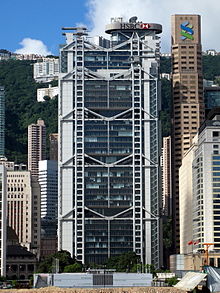
British banking giant, HSBC reached an agreement in 2012 with the Department of Justice that kept it from being hauled in to court on criminal charges due to its systemic assistance in laundering money for drug cartels and allegedly terrorists.  HSBC, with its Hong Kong headquarters shown above, is now in trouble again for alleged problems prior to the settlement agreement in 2012.

“The US Department of Justice is considering bringing criminal charges against HSBC and its executives as part of its investigation into whether the bank’s Swiss subsidiary helped US clients evade taxes.

Democratic senator Elizabeth Warren called on prosecutors to “come down hard” on HSBC if the bank is found to have colluded with tax evaders on Tuesday.

Her intervention came as US government officials with knowledge of the DoJ’s investigation provided the Guardian with new details about the inquiry.

View original post 898 more words