“Too Big To Fails” Have Stopped Being Banks | Zero Hedge

They have industrialized the business of debt slave mastery and collateral theft.

Alina's avatarAlina's Blog

In reality, big banks aren’t really acting like banks anymore.  Big banks do very little traditional banking, since most of their business is from financial speculation. For example, we noted in 2010 that less than 10% of Bank of America’s assets come from traditional banking deposits.

The big banks are manipulating every market.   They’re also taking over important aspects of the physical economy, including uranium mining, petroleum products, aluminum, ownership and operation of airports, toll roads, ports, and electricity.  And they are using these physical assets to massively manipulate commodities prices … scalping consumers of many billions of dollars each year (more here and more).

The evidence demonstrates that the big banks have essentially become huge criminal enterprises …  waging warfare against the people of the world.

Read more -> “Too Big To Fails” Have Stopped Being Banks | Zero Hedge.

View original post

The Foreclosure Crisis is Behind Us? Where? Who says?

Absolutely agree. It’s so close to total disaster proportions it is unspeakable. Don’t get me started. It’s calculated incompetence to say the crisis is behind us. We’re on a head on collision course.

justiceleague00's avatarJustice League

This won’t take long. It’s not like I want to write about this topic. It’s just that I feel obligated to say something here, because if you’re reading the mainstream news… or the lack of mainstream news… it could seem that the foreclosure crisis is now behind us… AND IT’S NOT.

In fact, I can tell you that it’s not even close.

Maybe the mainstream media has simply gotten tired of the topic. And it’s not like they’ve ever had a particularly good handle on what’s going on in real life when it come to foreclosures in general. So, perhaps I shouldn’t be surprised at the latest coverage, or lack thereof.

But I am surprised.

As recently as September of last year, RealtyTrac has been reporting that the crisis is “well behind us.” In its U.S. Foreclosure Market Report™ for August 2014, were reported on 116,913 U.S. properties in August…

View original post 214 more words

The Truth in Lending Act and Rescission: Lessons Learned by Lenders from Jesinoski v. Countrywide | The National Law Review

Alina's avatarAlina's Blog

I cannot emphasize enough the importance of the Supreme Court’s decision in Jesinoski.  The financial industry had used the courts to rewrite the Truth in Lending Act (TILA) for over two decades. Lenders did not feel they had any duty to respond to a rescission notice and lenders routinely ignored the rescission notices.  In fact, they did not feel they had a duty to follow any of the provisions of TILA.

But this was not TILA’s intention.  TILA was created as a consumer protection statute.  It was designed to level the playing field and allow consumers to be private attorney generals.  That put the consumer in the driver’s seat.  No wonder lenders successfully emasculated the statute for over two decades.

The Supreme Court put the teeth back in TILA and it’s scaring lenders because lenders do not like being accountable for their misdeeds.  Suck it up lenders and learn…

View original post 138 more words

In Corporate Crimes, Individual Accountability Is Elusive

20stewart-web-articleLargeBrandon L. Garrett is a specialist in corporate prosecution at the University of Virginia law school and author of the recent book “Too Big to Jail.”  By Khue Bui for The New York Times

“We have never hesitated to investigate and prosecute any individual, institution or organization that attempted to exploit our markets and take advantage of the American people,” Attorney General Eric H. Holder Jr. proclaimed this month when the Justice Department announced that Standard & Poor’s, the ratings agency, had agreed to pay $1.375 billion to settle civil charges that it inflated ratings on mortgage-backed securities at the heart of the financial crisis. Continue reading

Is the Promissory Note Even Enforceable?

The more we advance information – the more relevant earlier posts become.

Deadly Clear's avatarDeadly Clear

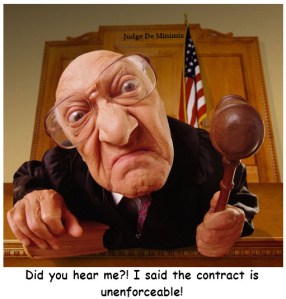
Judge UnEnforceableWhen all is said and done the courts come back to the main premise, “Did you pay?”. That is so injudicious on so many levels. The deeper we get into securitization and contract law we soon realize (after dissection) there is one very basic question being ignored – “Is the Promissory Note even enforceable?”

Sheila Bair’s (former FDIC Chairperson) new book, Bull By the Horns, addresses issues that must be taken into careful consideration when considering the validity of foreclosures – and she does it with impressive candor. Sheila separates the MBS into 2 categories:

View original post 2,757 more words

Comment Period for Amendments to CFPB’s TILA/RESPA Rules Open Until March 16 – DSNews

With all the different views on the recent TILA decision – let’s see how many foreclosure defense attorneys take the time to provide comments.

Alina's avatarAlina's Blog

The commenting period for the proposed amendments to the Consumer Financial Protection Bureau (CFPB)’s TILA/RESPA rules is open until March 16, according to the Federal Register website.
The proposed amendments were first published in the Federal Register on December 15. CFBP’s mortgage rules were first proposed in 2013 and went into effect in January 2014; the proposed amendments to the rules are under the Real Estate Settlement Procedures Act (Regulation X, or REPSA) and the Truth in Lending Act (Regulation Z, or TILA).

via Comment Period for Amendments to CFPB’s TILA/RESPA Rules Open Until March 16 – DSNews.

View original post

JPMorgan whistleblower: Justice still hasn’t been done

Let’s talk about Rehypothecation and collateral damage they have caused.

justiceleague00's avatarJustice League

piggy_bank_robbery_lobby_card

MPA:

Alayne Fleischman, who worked as a securities lawyer at JPMorgan between 2006 and 2008, turned over information on the bank’s dealings in shoddy mortgage-backed bonds during the run-up to the financial crisis. Attorney General Eric Holder was noted at the time saying the bank’s conduct, “helped sow the seeds of the mortgage meltdown.”

Rolling Stonerevealed her identity as a whistleblower last November.

In a recent interview with Financial News, Fleischman said justice hasn’t been served yet to JPMorgan and other major financial systems that caused the recession. “I’m still hopeful that, with enough public pressure, criminal cases will be brought against the individuals responsible, not just at JPMorgan but also at the other banks that sold fraudulent securities,” she told the media outlet.

She added banks are using their “lawyers, lobbyists and PR groups to protect individuals who should clearly be charged and tried in a court…

View original post 39 more words