Guest post: the foreclosure vote

Working in foreclosure defense across the country it was easy to see the correlation of Trump states with securitization corruption. It was amazing to watch an entire year of campaign speeches and never once hear from either side about Wall Street foreclosure corruption. Not one debate question asked about a subject at the very core of our economic decline.

Over 72 million homes were MERS marked for a national registry that ultimately leads to another globalization plan. 72 million homes = over 140 million Americans whose properties, whether they know it yet or not, have been compromised by undisclosed securitization securities transactions and rehypothecation. Let’s face it – HAMP is just another failed Obama program. See https://deadlyclear.wordpress.com/2012/09/12/chapter-8-foaming-the-runway-hero-neil-barofskys-bailout/

However, it’s not surprising that the main street media, like CNN, slanted reporting when its top institutional inventors include JPMorgan Chase, Bank of New York Mellon, State Street, Blackrock and other fine Wall Street Hillary supporting entities…see https://finance.yahoo.com/quote/TWX/holders?p=TWX … not to mention the fact that George Soros makes major donations to broadcast and cable companies.

No doubt Mr. Soros is well-versed in fraudulent foreclosures as he stood in the wings ready to take over IndyMac Bank after Senator Schumer just happened to express his concerns about the bank. Small world, yeah?

With that said it becomes more apparent why the media and left-wing globalists don’t like Steve Bannon as he has expressed his Wall Street securitization views:

“And I think that’s incredibly important and something that would really become unmoored. I can see this on Wall Street today — I can see this with the securitization of everything is that, everything is looked at as a securitization opportunity. People are looked at as commodities. I don’t believe that our forefathers had that same belief.”

There is not a knowledgeable homeowner in foreclosure that wouldn’t agree with Mr. Bannon’s securitization opinion.

Cathy O'Neil, mathbabe's avatarmathbabe

This is a guest post by Tom Adams, who spent over 20 years in the securitization business and now works as an attorney and consultant and expert witness on MBS, CDO and securitization related issues.

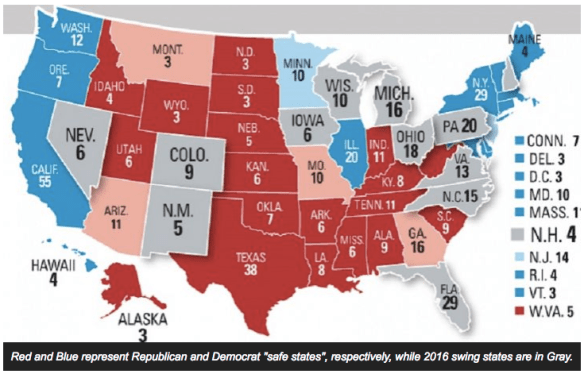
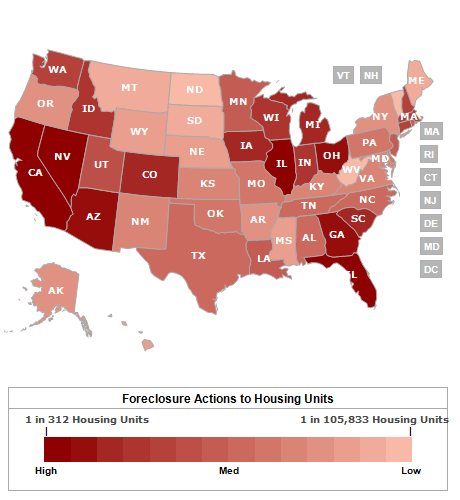
I don’t expect anyone to really come up with the perfect explanation for why Clinton lost and Trump won the presidential election.  But I do spend some time looking at these maps:
realtytracforeclosurescreen-shot-2016-11-14-at-6-34-06-am

The first map is from RealtyTrac, and indicates the states with the largest foreclosure inventory in 2012. The second is a map of the key battleground states. In 2008 and 2012, Obama won these states. In 2016 Clinton lost them. There’s a lot of similarities between those two maps.

Even in the best economic environment, residential mortgage foreclosure is a long, messy process. The massive wave of foreclosures that hit these regions after the financial crisis had enormous consequences economically. They also…

View original post 765 more words

JPMorgan to pay $264 million to resolve China hiring probe: SEC, DoJ

I hope the President-Elect is aware of all of these fines and settlements under the Dimon regime. It certainly adds controversy.

justiceleague00's avatarJustice League

JPMorgan Chase & Co (>> JPMorgan Chase & Co.) has agreed to pay U.S. authorities $264 million to resolve allegations it hired the relatives of Chinese officials in order to win banking deals, the U.S. Securities and Exchange Commission and the Justice Department said in statements Thursday.

The SEC and Justice Department had been investigating over several years whether some of JPMorgan’s hiring efforts involved bribes, in violation of the U.S. Foreign Corrupt Practices Act.

The SEC will receive $130 million of the settlement, with $72 million going to Justice and $61.9 million to the U.S. Federal Reserve, which penalized the bank “for unsafe and unsound practices.”

JPMorgan did not admit or deny the charges. As part of its settlement with the Justice Department, a Hong Kong unit of the bank admitted to making quid pro quo hiring agreements with Chinese officials to win investment business.

Read on.

View original post

Charlotte official blasts Wells Fargo, questions whether city should do business with bank

justiceleague00's avatarJustice League

As the Charlotte City Council prepared to vote on a routine insurance contract with Wells Fargo Insurance Services this week, council member LaWana Mayfield blasted the bank for allegedly creating more than 2 million credit cards and bank cards without customer’s knowledge.

Mayfield tried to postpone the vote, saying the city needed to “set an example of who we do business with” and that it shouldn’t reward a company that has “historically had a negative impact on majority-minority communities.”

Mayfield’s criticism of Wells Fargo was a sharp departure from the role usually played by local elected officials, who typically have seen the city’s largest employers as partners. Even during the aftermath of the financial crisis, there was little pushback against Bank of America and Wachovia/Wells Fargo for the role they played.

Other governments have cut ties with Wells Fargo over the scandal, including the states of California, Ohio and Illinois.

View original post 4 more words

Clatsop County is joining 11 other counties in a $50 million lawsuit against MERS over recording fees

If the banks had handled the securitization process properly the county losses would be substantially higher. Although it varies between banks, the average number of transfers is 3-4 to get to the trust. None of which we have ever found properly recorded between 2003-2008. Additionally, the rehypothecation of the collateral is, as far as we know, relatively overlooked altogether.

justiceleague00's avatarJustice League

Clatsop County is joining 11 other counties in a $50 million lawsuit against a private mortgage registry over recording fees.

The lawsuit alleges that Mortgage Electronic Registration Systems, or MERS, owes the counties millions of dollars in unpaid fees.

“We think we’re probably missing out on somewhere between $35,000 or $70,000 a year in filing fees,” Clatsop County Manager Cameron Moore said.

Under state law, whenever mortgage debt is bought or sold, the transfer must be recorded in county records. MERS, a private registry created in 1995 by the banking industry, has been serving as the owner of record. The mortgage-industry company has, for years, essentially transferred the beneficial interest of a property to itself, circumventing the typical filing fee owed to the county clerk’s office, Clatsop County Counsel Heather Reynolds told county commissioners last week.

Read on.

View original post

Federman & Sherwood Investigates Banc of California, Inc. for Possible Violations of Federal Securities Laws

justiceleague00's avatarJustice League

OKLAHOMA CITY–(BUSINESS WIRE)–The law firm of Federman & Sherwood has initiated an investigation into Banc of California, Inc. (NYSE: BANC) with respect to possible violations of federal securities laws.

On October 18, 2016, an article published on Seeking Alpha alleged that Banc of California, Inc. (“BANC”) had concealed numerous connections between it and Jason Galanis, who has been convicted of criminal securities fraud, including that: (1) CEO Jason Sugarman was the founder, CEO, and indirect owner of a company controlled by Galanis; and (2) separately, Galanis controlled BANC’s founding shareholder. The Seeking Alpha article also alleged that BANC had used an off-balance sheet lender to make loans to insiders. On this news, shares of BANC fell to close at $11.26 per share on October 18, 2016.

Additionally, BANC stated in its Securities and Exchange filing on November 10, 2016, that it is delaying the filing of its Quarterly…

View original post 77 more words

BIG BANKS TWEAK BUSINESS PLANS TO AVERT NEW REGULATOR COSTS

justiceleague00's avatarJustice League

Five of the country’s biggest banks detailed tweaks to their business models in hopes of persuading regulators they could absorb significant financial distress without requiring taxpayer funds to stay afloat.

The stakes are high for J.P. Morgan Chase & Co., Bank of AmericaCorp., and three others. If regulators deem these revisions of their so-called living wills—made public by the government Tuesday—to be insufficiently credible, those institutions could be ordered to hold higher levels of capital on their books, or to restructure and shed business lines.

Regulators are facing considerable pressure from politicians to use this process to break up the biggest banks, with many—notably Massachusetts Democratic Sen. Elizabeth Warren—arguing these institutions remain “too big to fail.”

Read on.

View original post