
UNJUSTICE
A Sydney Sullivan Story
“Although inspired in part by a true incident, the following story is fictional and does not depict any actual person or event.” Photos throughout the fiction are to assist with your own imagination.

Carl knew he didn’t want to discuss the Louis Harding issue in his chambers, in fact, Carl really didn’t want to discuss it anywhere in public either – or in Louis Harding’s office. This made it all the more difficult to structure the opportunity to have a confidential meeting. Carl thought of a plan where no one would interfere or suspect the agenda. Carl’s brother-in-law, Phil, was a Senior Executive at Andersen Corporation in Bayport, about 26 miles from Minneapolis. Carl asked Phil if he might be able to use the company’s board room for a private meeting after hours. Without telling Phil the details, but assuring him it was needed for good reason, Phil gave him various dates that the room would be available. Carl thanked him and said he would let him know what date could be confirmed.
Next, Carl had to figure out a way to get Louis Harding to Bayport for a meeting. ‘I’ll just be cryptic when I call him,’ thought Carl.
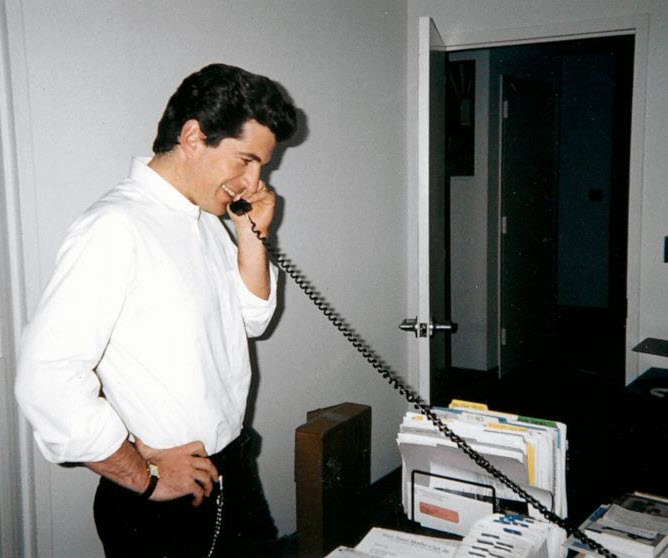
The phone rang on Wednesday in Louis Harding’s office at 5:30 pm, after the staff had left for the day. “Louis Harding Law Offices,” a male voice answered the phone.
Judge Carl didn’t want to leave a message so he asked to speak with Mr. Harding. “This is Louis Harding, how may I help you?” The voice on the other end was kind, yet strong. Carl explained that he needed to meet with Louis and asked when it might be convenient to meet at the Andersen Corporation in Bayport, preferably after business hours. “Do you want to give me an idea what this about, Judge? So, I can be prepared?” Louis inquired.
“Not really, at this time,” Carl hesitated, “I’d rather not have any preconceived notions before we meet and I’d like to keep this meeting confidential.” Carl knew how detailed Louis could be and rather than make up a story and have Louis spend a lot of time researching fabricated issues, Carl just left the reason for the meeting vague.
“Looks like I can meet on Friday evening about 6:30 pm – if that works for you, judge?” Louis and Carl calendared the appointment.
Louis didn’t need directions because Andersen was a well-known company in Minnesota. He did wonder what could be happening at Andersen that the judge would want to meet there,

or was it a personal problem someone in the company had? Louis had no idea of any relationship the judge might have to the corporation. Although, it was strange that a judge might throw himself in a corporate dispute …anyway, the idea of a high profile client intrigued Louis and of course, he researched Andersen before the meeting, anyway.
Carl told Ole he had scheduled a meeting but didn’t tell him where or when. The less said to any one the better. Friday rolled around quickly. The week’s court room schedule was packed. Carl put off the last hearing on the docket until Monday fearing it would run long and he might be late getting on the road to Bayport. Carl wanted to arrive before Louis so he could be calm and prepared for the discussion.
Carl arrived at Andersen early, about 5:30 pm. He went directly to Phil’s office and thanked him for allowing the use of the conference room. Phil’s office was on the same floor as the conference room but far enough away that he could not see or hear the meeting without entering the private room.
“Not a problem, Judge. I have to work late tonight anyway. Stay as long as you need, security is here all night. When you are done just let security know and they will let you out,” instructed Phil. Phil also told Carl to give the security guard at reception the name of his guest and one of the security guards would escort Louis to the private board room.

The board room was equipped with a full bar, snacks, sodas and bottled water. Several Andersen window brochures were left on the table as well as Architect magazines featuring Andersen products adorned the walls.
Louis Harding arrived right on time, just like he always did in Carl’s court. Being on time was a sign of respect in the judicial realm. Lawyers, or their clients, that were late already started out with an uphill battle. After the security guard had departed on the elevator and the pleasantries of greeting each other, Carl opened the dialogue by explaining, “This is a very serious and confidential subject and I am glad that you agreed to meet with me here, although this has nothing to do with Andersen.” Carl was very careful not to explain why the meeting was at Andersen.
“Louis, you are one of the best attorneys I have had in my court. And this is one of the most difficult conversations I have ever had to initiate. I can’t dance very well – so, I won’t try to lead you on but I want you to know that I am willing to listen,” Carl tactfully prefaced the conversation.
Carl took a straight forward approach, “Your foreclosure defense strategy has come to the attention of others that want you to step back from defending homeowners.” Carl looked right into Louis’ eyes. He could see the double disappointment of first, not being called to Bayport for a new client and second, being approached by a judge he respected to end his defense of homeowners.
“I’m at a loss for words, your honor,” Louis retorted. “Are you telling me not to represent these families in foreclosure? Or are you telling me my approach is legally wrong?”
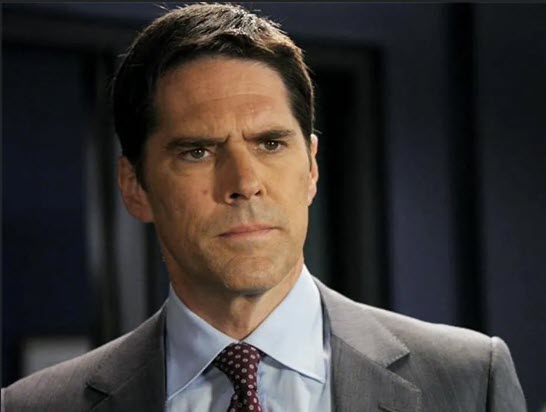
“Louis,” Carl searched for the most passionate way to express himself, “I personally haven’t heard your defense arguments in my court and knowing how well-prepared you are I doubt the approach is legally wrong. But others are concerned that your cases could affect the Minnesota economy.” ‘Oh, that was a poor choice of words.’ Carl thought to himself.
“Who are the “others” you are referring to, Judge? Is it the banks?” Louis was getting agitated. He had been around for enough years to know how special influence worked, especially in an election year. Louis didn’t want to jump the gun and assume that Carl might be associated with some sort of bribery so he sat back in his chair and gave the Judge his full attention. ‘When he’s through maybe I can enlighten him,’ Louis thought.
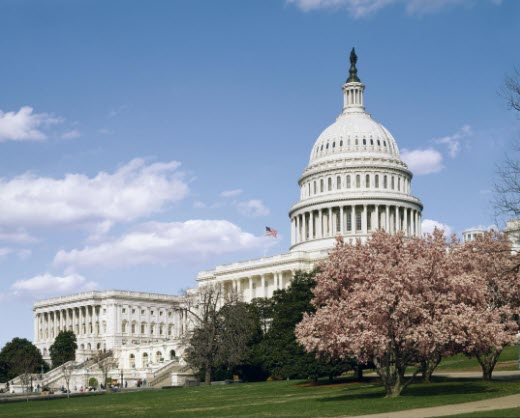
“No, it’s not the banks – its higher up than that,” Carl answered, although in the back of his mind he wondered if maybe there wasn’t some hidden agenda dealing with the Senator’s upcoming campaign and whether or not the banks were actually an
issue below the state’s pension funds. Carl debated on how much he should disclose to Louis and that would depend upon how Louis reacted as the conversation continued. “I’m sure you know there is a shortfall in the state pension budget,” Carl continued, “and a lot depends upon the economic stability of the national financial system. Foreclosures cause…” Louis cut him off just at that point.
“I realize there is a deficit in the state pension fund budget of $16.7 billion dollars that is growing every day. The foreclosures didn’t cause the ‘shortfall’,” Louis mocked Carl’s terminology. “Bad investments created the deficit and now Minnesota homeowners are paying for it with the loss of their homes! Judge, how much do you know about securitization and foreclosures?” Louis was careful not to sound condescending.
Carl took note of the slight hostility in Louis’ voice. “Not that much, I’m sorry to say,” Carl openly admitted. “All I know is that there are over 300,000 Minnesota government employees whose pensions are on the line and if the banks fail, these folks could lose their pensions and some, will likely lose their jobs.”
“But, these are folks with a cushy government job, right? They’ve had a job, a paycheck, a home, a chance to refinance their mortgage to a very attractive low interest rates…
They’ve never experienced a
4 am swat team raid at their home with the sheriff, a swarm of police cars and the swat team at gun point forcing the entire family, including young children, out on the street.

Let me give you some statistics that beat your 300,000 points,” Louis was ready to pour on the stats like syrup over pancakes. “From 2005 to 2008 there were over 68,000 Minnesota homes lost in foreclosure and over 25,000 per year for the following four years after that. That’s over 168,000 Minnesota homes lost which affects over 318,000 people – the families, many of which are your constituents and the media doesn’t tell you about all the devastation because the media is owned and beholden to the banks. And this hasn’t stopped – it continues to grow year after year.” Louis was on a roll.
Carl took a deep breath and thought ‘this is not going to be easy – no slam-dunk agreement is going to happen here tonight’ and offered Louis a bottle of chilled water. Louis nodded with acceptance. As Carl opened his water he leaned forward and ask Louis why he thought this had happened. Carl had never heard solid numbers because after 2008, the media talked about foreclosures in percentages rather than relative numbers. Maybe because percentages made it sound less intrusive. Before Carl could comment, Louis drank some water and picked up where he left off.
“That’s just the firm foreclosures. There are nearly that many more in various phases of foreclosure, modifications or just a paycheck away from disaster. You want to know why I defend these folks, Judge?” Louis was quite serious, “It’s not for the money, you know. Most of these families have spent all of their savings trying to get a modification. The banks ask for money and promise reinstatement, then foreclose anyway and try to strangle these people with debt. These loans …loans ha!
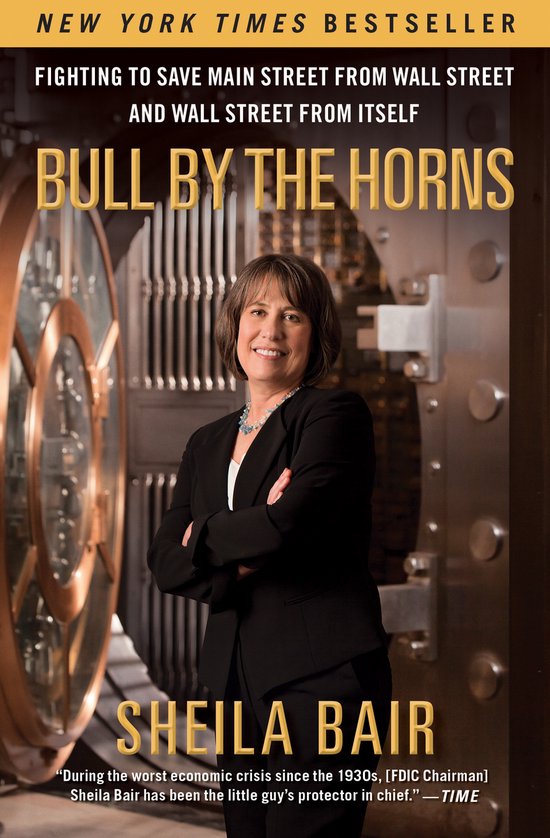
These weren’t loans, they were securities sales…,” Louis looks to see if Carl is intrigued and continued, “The head of the FDIC called these NTMs – non-traditional mortgages. She wrote a book telling the world these were securities.”
Carl finally had an opportunity to break in when Louis went for a sip of water, “What do you mean securities? There is a mortgage and a note. How does a homeowner enter into a securities transaction?”
“Unwittingly, your honor,” Louis was now in his foreclosure defense mode and astute enough to see Carl was sincerely perplexed. It was almost 7:30 pm and neither of them had any dinner. Carl was getting hungry and he knew it was going to be a long night.
“Are you hungry, Louis?” Carl asked, “how about we see if security knows how we can order a pizza?”
Louis gratefully explained he hadn’t eaten lunch because he had a last minute opposition to file and he had to get it done before he left his office. Carl used the board room phone and dialed security. “Is everything all right up there Judge?” asked the man on the other end.
“Oh yes,” Carl chuckled, “we just wanted to know if we might be able to order a pizza?”
“Sure can, what would you like on the pizza? Stillwater Pizza Hut delivers,” an accommodating voice on the other end of the phone questions.
Carl looks over at Louis, “Pizza Hut delivers. Whaddah ya like on your pizza?”

“I’m a simple kind of guy and a pizza purist – just pepperoni is fine,” says Louis and Carl thinks to himself, ‘kindred spirits.’
“Pepperoni it is – One large pepperoni pizza please, and how do I pay for it?” Carl inquires to the security guard.
“We have an account – just take it up with Phil tomorrow.” Click, the phone was hung up by the security guard.
Louis didn’t want the Judge’s attention span to linger waiting for the pizza delivery, so he continued. “Look Judge, these are not traditional mortgages. The documents may look like traditional mortgages but the documents are just eye candy. The transaction was securitized before the homeowner ever signed the first document.”
Carl squinted, raised an eyebrow as he closed the other eye in a look of disbelief. Judge Carl always wore his thick black-rimmed glasses on the bench and the local fraternity always knew if something was said during a hearing that the Judge highly disapproved of or that was bordering on contempt, Judge Carl would lift his eyebrows and look over the glasses sitting about midway on his nose. That was a sign a hammer was about to strike and it wasn’t coming from his gavel. More than once Louis had seen opposing counsels chewed out and sometimes sanctioned for something they had tried to get away with or put on the record contrary to a court ruling. Tonight Carl wasn’t wearing his glasses because he felt it might be too stern of a look. But that look, a little softened, was coming across the table.
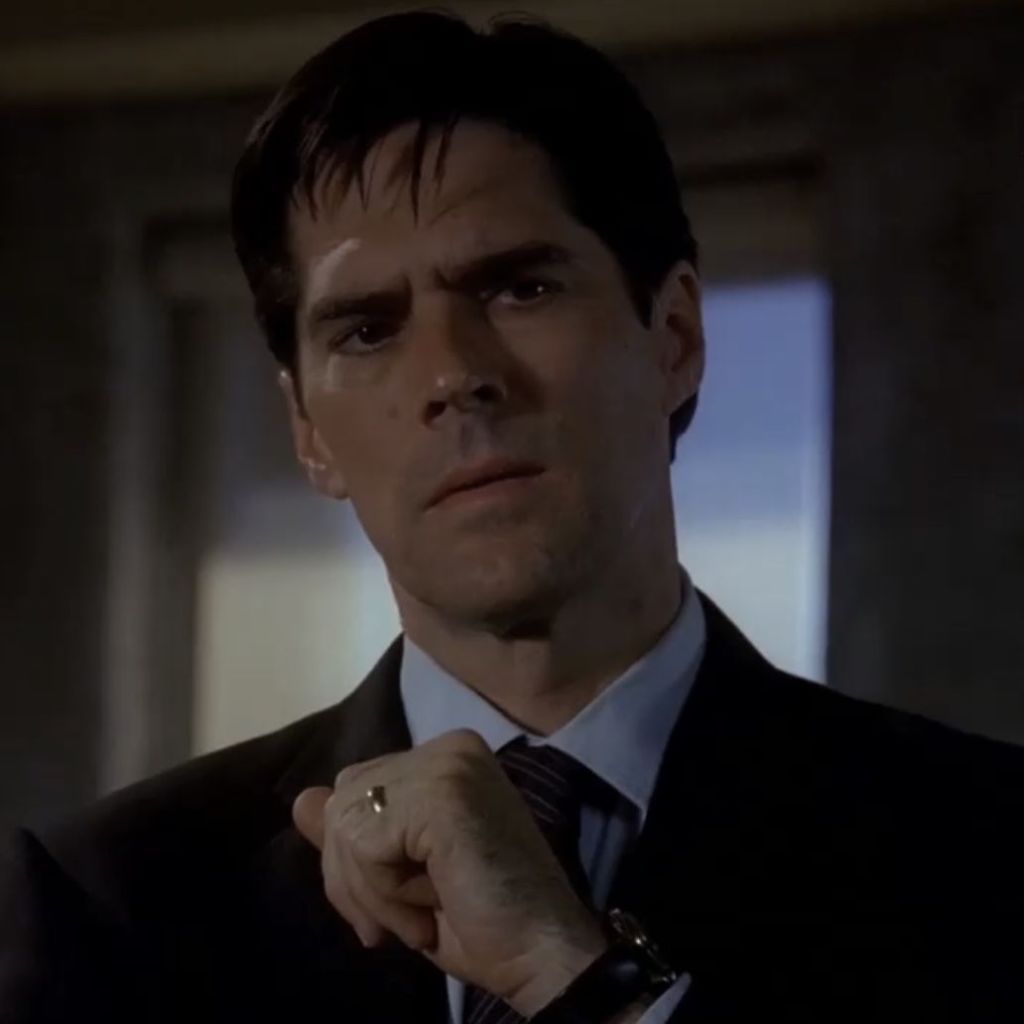
Louis locked his deep set eyes upon his respected colleague. A myriad of thoughts tumbled through his mind as he debated where to start. ‘How much does he know?’ ‘Does he want to know?’ …
‘What hope does he have of understanding when his entire existence hinges upon not looking upon the chaos his own hand has unleashed?’
Louis hesitantly began, “I really don’t know what to say to you. How much do you really want to know? How much do you want to understand? Do you have the courage to look?”
“I don’t understand,” Carl answered with trepidation.
“You are backed into a corner. No matter which way you turn you lose. You don’t want to make the hard choices and I, for one, demand it. I can’t stop. What you should be asking is what is it that motivates me to go down this path.” Louis was posturing.
Carl sat back in the chair wanting to hear what drove Louis. “OK. I’ll ask. Why are you doing this? Why do you choose the path of self-destruction? Why do you keep pushing when you know what you are up against?”
Louis still wasn’t sure how to present the argument to a Judge he had long admired. “You want the short answer or do you want the long answer?”
“I’ll take the short one. Can you sum it up convincingly for me?” Carl had his professor persona coming through and making the opportunity for the experienced trial lawyer to gather his thoughts.

“Because you and your cohorts leave me no choice,” Louis answered with the shortest possible response.
Carl looked toward the windows where the evening dusk had turned dark and only street lights could be seen in the distance. “Well, you are just going to have to explain yourself with that. I’ll bite, what’s the long answer?”
Louis took a long pause – clearly many ephemeral thoughts pasting through his eyes, “Tell me about your experience in law school. Tell me about your most influential professor.”
Carl answered quickly with no hesitation, “That would have to be Professor Morrison. He’s dead now. He taught contracts. He taught me to think and explore contingencies. How to craft language to reflect complicated ideas. He taught me to see the beauty in the law, it’s clear thinking. I suppose you could say he inspired in me a “Love” of the Law.” Louis nodded, “Interesting.”

“You know there is a story about Professor Fred Morrison besides his colorful ties, Fred was the person who knew everything about the history of the Law School and its relationship with the University as a whole.
When we had a question about what our rules were that couldn’t be solved by looking at the formal documents, we went to Fred, and he would tell us the historical precedents,” Carl reminisced, “Morrison was an intellectual powerhouse, holding two undergraduate degrees, two master’s degrees, a Ph.D., and a J.D. He attended Oxford on a Rhodes Scholarship before earning a Ph.D. in political science from Princeton University and a J.D. from the University of Chicago Law School.
While at Minnesota Law, he taught constitutional law, international law, local government, and comparative public law. I took more philosophical classes with Professor Morrison than any other professor. I have great memories of those classes. After discussing a case, he would draw on his vast experience to explain a situation in which he had been forced to consider the University’s obligations under the Constitution.
Many times, I would go to his office for guidance when a question or problem arose. I would have to be sure that I didn’t have anything on my schedule for a while because he would answer with a story. A long story. For much of that story, I would not be at all sure where it was going, but by the end, it reached an extremely useful point, and I knew more about our history. Yeah, he would have to be the one. I would say Professor Morrison was the guy who influenced me most. He’s the one who made me want to become a judge.”
Louis was intrigued, “Why or how did you come to be a judge?”
Carl took a long pause, “I like writing opinions. I like showing off my reasoning skills. Sure, a lot of the work is mundane. Riding herd on the court listening to people whine about traffic tickets is annoying, but every once in a while a case will come along that explores a gray area and I get to write an opinion.
I enjoy that because it lets me apply law to man’s behavior rather than have it work the other way around.”
‘I’m getting just where I want to go’ Louis thought to himself, “the rule of law?”
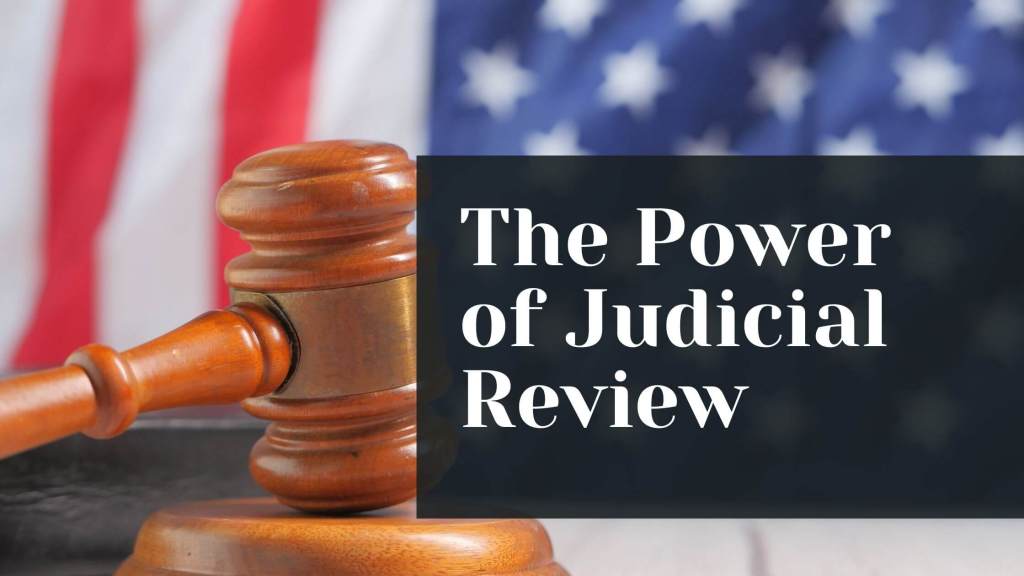
Carl took a deep breath. “The rule of law,” Carl paused, “but Louis, these people took out a mortgage they couldn’t afford…”
Louis cut Carl off in the middle of his statement, “Judge, actually, they didn’t. They were the raw material for a complicated securities transaction and they were used that way without their consent.”
Carl’s rational side immediately kicked into play. “What on earth are you talking about? It’s a mortgage. These people aren’t able to pay. The law says if you don’t pay your note, the holder can use the mortgage to foreclose upon the security. It’s simple. It’s contract law 101. Why do you continue to defend these people? I agree that there are, uh . . . irregularities in the paperwork but that doesn’t change the fact they took the money or got a house, agreed to pay a mortgage and then didn’t pay it back.”
“I can see I have my work cut out for me trying to convey anything. You want to know why I keep defending these people? Because what they are saying is true and the ramifications affect all of us. You, me, your grandchildren, heck, it even affects your grandchildren’s dog. It affects all of those government employees you think you are trying to protect. While you’re on the bench protecting the banks, making bad law and displacing all those people you don’t personally know – what the fuck are you going to do when it’s a family you do know?! Pretend it doesn’t matter?”
Carl wanted to keep the conversation on a less excitable level. Shaking his head Carl said, “You don’t have to use language like that.”
“Yes I do. You need to be real clear about how nasty this shit is and that there isn’t a hole big enough to bury it in, because truth pressed to the ground will always arise and what is coming up is horrible…

We have no way of dealing with it unless we see it clearly for what it is and it must be dealt with or the whole world will collapse. I’m not trying to be vulgar to shock you. I can only provide you the information if you are willing to handle the truth.”
“And just what is the truth?” This is a question Carl faced several times a day. He knew when someone was telling him the truth and when they were exaggerating or lying. Carl had spent his life studying body language, facial expressions, voice tones and eye movements. For Carl it was a prerequisite for his job. ‘I’ll know if Louis is just blowing smoke or if he really believes what he is saying. And if he’s for real – I’m going to make him prove it,’ Carl thought to himself.
Louis didn’t blink, flinch or even touch his nose. “The entire world is financed by your mortgage payment – yours and everyone else’s. Your mortgage has morphed into money. It literally is the reason you have bananas on your breakfast table at Christmas time.”
“What you are saying is making no sense. A mortgage is a simple contractual document representing a security interest in a piece of property to be liquidated in the event of failure to pay on a promissory note. I’ve heard you argue some of these cases. I’ve heard you talk about transfers to closed trusts, broken chains of title. It doesn’t change the fact they failed to pay.”
The pizza was cold by this time and the cheese had stiffened.
“Look Judge,” said Louis, “I believe you really want to know – and securitization and rehypothecation in this new century are not simple subjects. It wasn’t taught to us in law school. In fact, it has strategically evolved over the last 20-30 years getting to this point without anyone even noticing the changes that were taking place…”
“In order for me to get you to see this, I am going to need to take you back in time to show you – but I can’t do it in just one night and I wasn’t prepared for this, ya know? Give me some time to collect the materials I need to give you a crash course.
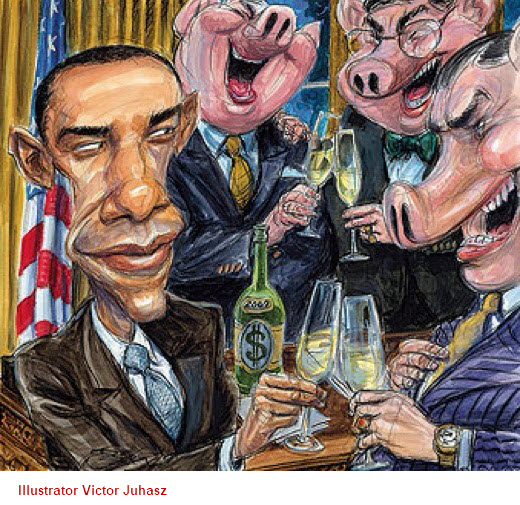
I know you are going to want to see evidence along the way,” Louis smiled. Carl knew that whatever Louis was willing to explain was something that he truly believed in – to the point of sacrificing his own career. Louis was serious and his honest nature was not superficial. In his gut Carl knew there was something he had to learn.
“Okay, how long do you need to prepare?” Carl stopped short because he almost finished the sentence like he would have in court, ‘how long do you need to prepare for trial?’
Louis thought for a moment, almost relieved that Carl was willing to at least listen. It felt like a thousand thoughts ran through his head in a matter of seconds. ‘What’s the best way to start? How did I get hooked? What matters most? How long is his attention span? All of these questions shot through his brain before he could even think of an intelligent answer.
“I think I have to prep you before I start. In my car I have a book I want to give you to read – and if you can give me a week while you read this book I can collect and organize enough information to get you into the game.” Louis had a library of Wall Street related material – but the book that captured him initially was The Big Short by Michael Lewis. He just happened to have the book in his car with all of his underlines and highlights. ‘Kismet? ‘Maybe,’ thought Louis.
As they walked out to the empty parking lot in the middle of the night, the security guard smiled, wished them good-night and watched them as they walked toward their cars.
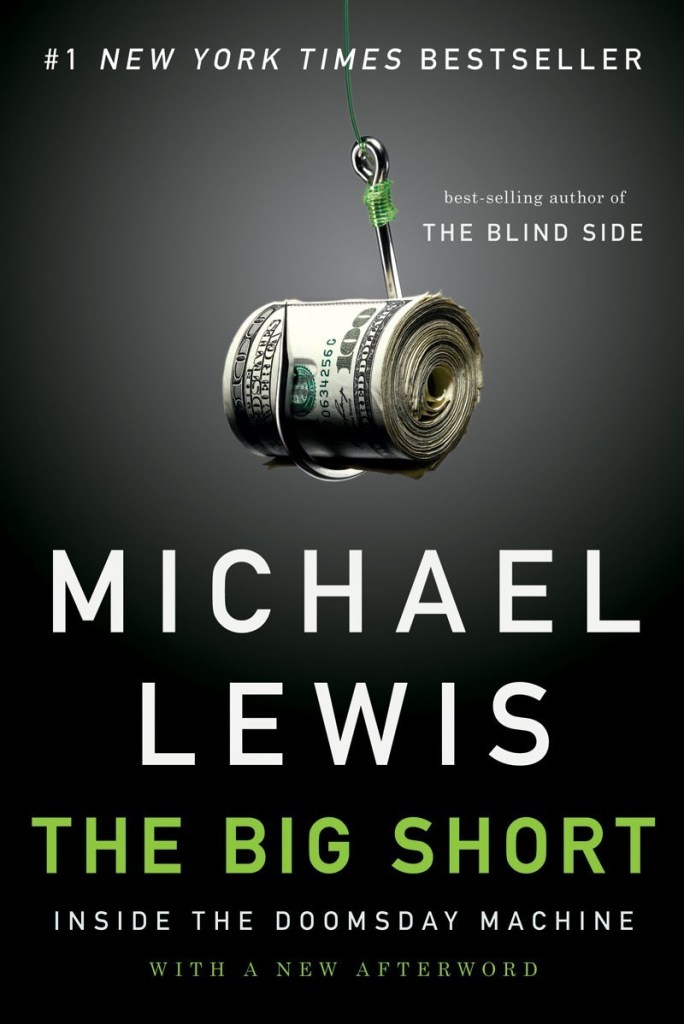
Louis grabbed the book from his back seat, “I know it’s a little shabby and dog-eared, but I’ve read it over and over several times. And I refer to various parts of it when I’m researching. Michael Lewis is a good writer, but what makes this so special is that he actually worked on Wall Street while these new mortgage-backed securities were being created – this is his inside story. I guarantee you it’ll be a movie someday.”
Carl hadn’t heard of the book or Michael Lewis, but he was curious enough to want to read it. “Thanks. Louis, you know you are on borrowed time – I’ll check and see if we can meet here again same time next week, if that works for you?” Louis pursed his lips with a slight smile and nodded yes. “Good, I’ll call you as soon as I can confirm the room.”
They shook hands and turned to go back to their cars under a half moon and the Minnesota sky covered with twinkling stars. After about 10 steps Louis turned around and called out, “Judge, while you are reading the book I want you to think about… “weaponized data.”
*Special thanks to Minnesota Law for their special spotlight on Professor Morrison.
*****************
UNJUSTICE is a new series on DeadlyClear that will upload as chapters are completed. Please subscribe so you don’t miss as the story progresses. Inspiration and research in part with Vermont Trotter and our foreclosure defense network.
Copyright DC 2016-2024.

 Deadly Clear